Robinhood grew on word of mouth first. In its 2021 IPO filing it said over 80% of new funded accounts came organically or through its referral program, which gave both people a free share.
It also paid influencers per funded account. FINRA found it paid about 75 influencers at least $2.7 million without proper review or ad labels, and fined it in March 2025.
Today it runs narrower creator programs, its own media (Snacks and Sherwood), live events and an in-app social feed, with funded customers at 28.7 million in Q3 2026.
Robinhood is one of the clearest case studies in trading app marketing, good and bad. It built a referral loop that brought in most of its early customers, paid creators to bring in more, ran into the rules on how that must be done, and kept going with its own media and community. This breakdown uses Robinhood’s SEC filings, its newsroom and FINRA’s own documents to show what it did and what any trading platform can learn.
Referrals came first
Robinhood’s early growth was not bought. Its IPO filing credits word of mouth: This powerful word-of-mouth referral network has helped to rapidly grow our customer base. The share was large: over 80% of new Funded Accounts joined our platform organically or through the Robinhood Referral Program.
The offer was simple. Robinhood credits referring and referred customers with a stock reward (of one share each per referral), though the share was usually small: Approximately 98% of customers receive a stock reward having a value ranging from $2.50 to $10. Robinhood called referrals cheaper than other channels, saying it generally has lower direct expense rates as compared to other marketing methods, and reported that its average revenue payback period improved to less than five months for 2020 cohorts.
It worked because the audience was new to investing. The median age of customers on our platform was 31, and over half of the customers funding accounts on our platform told us that Robinhood was their first brokerage account. The program is still running in a bigger form: You can earn up to $15,000 in bonus stock rewards per year.
“We’ve heard from active traders that they rely heavily on social media to navigate the markets.”Robinhood (September 2025)
Then a brand and its own media
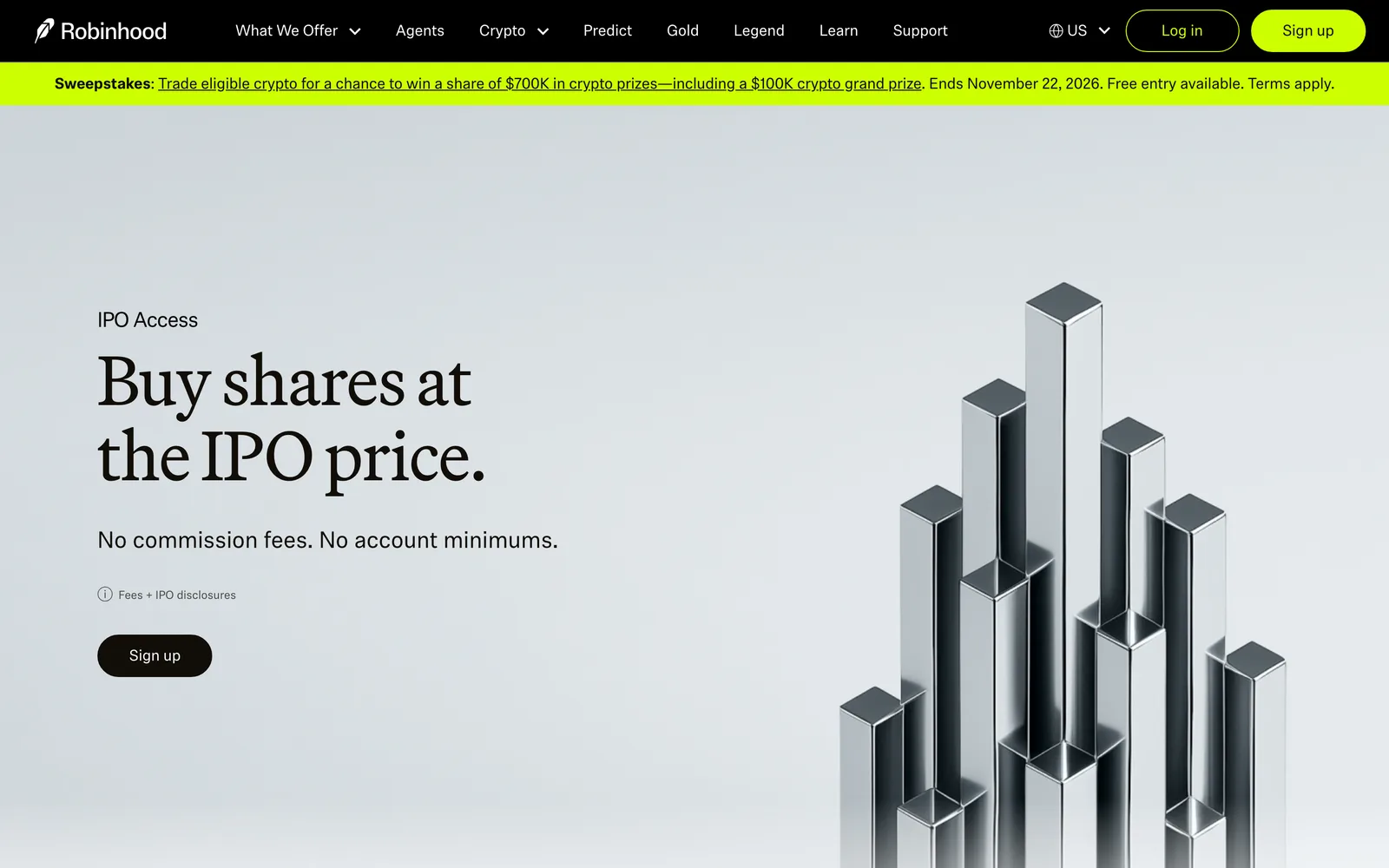
In 2021 Robinhood went mainstream with its first-ever Super Bowl commercial and a line built for new investors: We are all investors. The campaign was reported as Robinhood's largest to date.
It also built media it owns. Robinhood Snacks is an accessible digest of business news stories written for a new generation of investors. By March 2021 our Robinhood Snacks newsletter and podcast had nearly 32 million subscribers, and monthly unique visits to Robinhood Learn rose nearly six-fold. In 2023 it set up Sherwood Media to add original reporting, new newsletter offerings, social-first content, and live events, describing it as a news org for a generation lost between the business broadsheets of yesteryear, and the short-form social media stories of today.
Paying creators per account
Robinhood also paid creators, and says so: social media influencers are a marketing channel that we actively utilize. The way it paid them is where it ran into trouble. FINRA found that RHF paid certain influencers who promoted the firm in social media communications an amount for every new account that was opened and funded by the customer using a unique link provided by RHF. It did not limit the compensation these influencers could earn, resulting in the firm paying approximately 75 influencers at least $2.7 million. Through those links, customers opened at least 25,000 new accounts.
The problem was supervision, not the idea. FINRA said Robinhood did not have a registered principal review and approve influencers' static content (such as static videos) prior to their publication. One post it cited promised 100% free. Not even kidding. And many influencers' social media posts promoting the firm failed to clearly identify the communications as paid advertisements. In March 2025 FINRA fined Robinhood Financial and Robinhood Securities $26 million for violating numerous FINRA rules, including that it failed to reasonably supervise and retain social media communications promoting the firm that were posted by paid social media influencers.
The rules every trading app now works under
The Robinhood case was part of a wider review. In September 2021, FINRA launched a targeted exam (sweep) to review firms’ practices related to their acquisition of customers through social media channels, covering TikTok, Facebook, Instagram, YouTube, Twitter, StockTwits, Reddit and Twitch. It led to five formal enforcement actions.
The key rule: creator posts can count as the firm’s own ads. Under FINRA’s guidance they would constitute retail communications subject to FINRA Rule 2210 if a member firm either (1) paid for or was involved in the preparation of the content prior to posting. A retail communication is anything made available to more than 25 retail investors within any 30 calendar-day period. FINRA’s list of good practice starts with Evaluating potential social media influencers’ background and prior public social media activities for compliance and reputational risks.
Robinhood adjusted rather than quit. in March 2023, RHF ended its influencer program as described above, and the company says it narrowed the scope of our social media influencer and affiliate publisher programs. Its current referral terms still mention participants in any Robinhood-sponsored content creator, influencer, or affiliate marketing program, and keep paid creators out of the referral rewards.
Where the money goes now
Spending has grown fast. Advertising costs are expensed as incurred and were $74 million, $179 million, and $274 million in the years ended December 31, 2023, 2024, and 2025. Events count as marketing too: Other marketing costs increased $27 million primarily related to our keynote events. Its 2026 HOOD Summit reported 46+ million livestreams, and the keynote lives on Robinhood’s YouTube or X.
The newest move brings the conversation inside the app. Robinhood said We’ve heard from active traders that they rely heavily on social media to navigate the markets. Robinhood Social began with 1,000 customers who attended HOOD Summit and by September 2026 was going live to all eligible customers in the U.S. Meanwhile Funded Customers increased by 1.9 million, or 7%, to 28.7 million in the third quarter of 2026. All figures here are Robinhood’s own.
What any trading platform can copy
- 01Make referral the first channelA simple two-sided reward turned customers into Robinhood’s biggest source of new accounts.
- 02Own your mediaA newsletter, podcast and short-form channels keep you in front of people between trades.
- 03Vet creators before they postCheck their history, brief them and approve every video first.
- 04Label every paid postAd labels and risk wording on the post itself, never “free” without the conditions.
- 05Track every linkKnow which creator and which post sent each click, and keep a record of all of it.
For the method, read how to market a trading app, finfluencer marketing rules and our retail trading statistics. For a platform that pays its own users to post, see our eToro Pro Investor breakdown, and for a UK broker built on a free-share referral, how Trading 212 markets, and for a broker that pays creators per funded account, how Webull markets. For a social investing app that moved upmarket, see how Public.com markets. To have it run for you, see our trading platform marketing agency service. For a finance app that grew mostly on referrals, see how Revolut markets. For a broker built on its own live network, see our tastytrade marketing breakdown. For a broker that grows through paid ads, affiliates and referrals, see our Interactive Brokers marketing breakdown. For a trading app that grows with paid creators, stock bonuses and a sports sponsorship, see our moomoo breakdown. For a finance app that pairs a stadium name with athletes, a finance creator and paid referrals, see our SoFi breakdown. For a broker that owns its own TV network, see our Charles Schwab breakdown. For an older broker that also went to $0 trades, see our Fidelity breakdown. For an older broker that also cut commissions to $0, see our E*TRADE breakdown. For the low cost, buy and hold side, see our Vanguard breakdown. For a fintech app that casts streamers in its ads, see our Chime breakdown. For an investing app that settled with the SEC over social posts, see our Wealthfront breakdown. For an investing app that publishes creator fee caps, see our Betterment breakdown. For an investing app built on spare change, see our Acorns breakdown. For a platform that says it does not care if you trade, see our TradingView breakdown. For a Canadian app that launched the first commission-free trading platform in its country, see our Wealthsimple breakdown. For the UK app an early backer called a free stock trading app similar to Robinhood, see our Freetrade breakdown. For an Indian broker that says it has never advertised, see our Zerodha breakdown. For an investing app that built web pages for thousands of stocks so Google could read them, see our Groww breakdown. For an Indian broker that made opening an account take minutes, see our Upstox breakdown. For a European commission-free broker built around a simple app, see our Trade Republic breakdown. For a money app that grew through hip-hop and a weekly giveaway, see our Cash App breakdown. For a broker that built its own prediction market exchange, see our ForecastEx breakdown. For a trading app in India that taught fraud safety through a humorous character, see our Angel One breakdown. For a trading app with more than one million clients across six European countries, see our Scalable Capital breakdown. For a broker named the #1 Innovation broker in the 2026 StockBrokers.com Online Broker Review, see our TradeStation breakdown. For a broker that offers Pre-IPO investing in companies before they go public, see our Questrade breakdown. For an investing app with 3,085 stock pages and 942 ETF pages, see our Stash breakdown. For a trading platform that sells its brokerage to developers through APIs, see our Alpaca breakdown. For a broker whose median guide shows a 9 minute read, see our Axi breakdown. For a trading app whose founder still writes its blog, see our M1 Finance breakdown. For an investing app that built its own media, see our Stake breakdown. For an investing app that built its own media, see our Sharesies breakdown. For a trading app that grew with referrals and its own media, see our Warrior Trading breakdown. For a trading blog that grew from investor profiles into lessons with video, see our Earn2Trade breakdown.
We run creator campaigns and daily short-form for trading platforms, with briefs built for the rules in every market, approvals before anything goes live and every post tracked for views, link clicks and click-through rate. The system in this article, run for you.
Frequently asked questions
Mostly through word of mouth. Its 2021 IPO filing says over 80% of new funded accounts joined organically or through the referral program, which gave the referrer and the new customer one free share each.
Yes. FINRA found that from November 2019 to March 2023 Robinhood paid about 75 influencers at least $2.7 million, per funded account, without a principal approving the content or the posts being clearly marked as ads. Robinhood’s current referral terms still mention sponsored creator, influencer and affiliate programs.
In March 2025 FINRA fined Robinhood $26 million for several rule breaches, including failing to supervise and keep the social media posts of paid influencers. Paid creator posts can count as the firm’s own retail communications under FINRA Rule 2210.
Robinhood’s own business news digest. In 2021 the newsletter and podcast had nearly 32 million subscribers, and in 2023 Robinhood folded it into Sherwood Media, a news brand that includes social-first content.
- SEC EDGAR, Robinhood Markets IPO prospectus Form 424B4 (Jul 2021)
- Robinhood, Tiered Referrals Program (Nov 2026)
- Robinhood Newsroom, We Are All Investors (Feb 2021)
- Marketing Dive, Robinhood forges ahead with Super Bowl debut despite GameStop uproar (Feb 2021)
- SEC EDGAR, Robinhood Markets Form 10-K for fiscal 2025 (Feb 2026)
- Robinhood Newsroom, Robinhood Announces Sherwood Media, LLC (Jan 2023)
- Robinhood Newsroom, Sherwood Media Portfolio Grows with Chartr Limited Acquisition (Dec 2023)
- FINRA, FINRA Orders Robinhood Financial to Pay $3.75 Million in Restitution to Customers (Mar 2025)
- FINRA, Letter of Acceptance, Waiver and Consent No. 2020066971201, Robinhood Financial and Robinhood Securities (Mar 2025)
- FINRA, FINRA Provides Update on Sweep: Social Media Influencers, Customer Acquisition and Related Information Protection (Feb 2023)
- FINRA, Rule 2210. Communications with the Public (Nov 2026)
- Robinhood Newsroom, Robinhood Unveils Powerful New Tools for Active Traders at HOOD Summit 2025 (Sep 2025)
- Robinhood Newsroom, Robinhood Social is Now in Beta (Mar 2026)
- Robinhood Newsroom, Robinhood Puts the Power of Hedge Funds in Every Trader's Pocket (Sep 2026)
- Robinhood Newsroom, A Look Back on HOOD Summit: Engines of Creation (Oct 2026)
- SEC EDGAR, Robinhood Markets Form 10-Q for Q3 2026 (Oct 2026)
- Robinhood, Robinhood Gold Membership (Nov 2026)