Coinbase grew on word of mouth first: at its 2021 listing, over 90% of retail users had found it organically or by word of mouth.
Then it bought growth. Digital ad spend rose by $397.3 million in 2021, before the company moved money into brand work like the 2022 Super Bowl QR code.
Today USDC rewards cost more than its marketing programs, creators and affiliates sit alongside them, and UK and US rules decide what each can say.
Coinbase is one of the few crypto companies whose marketing budget is public, line by line, in its SEC filings. Read together with its own program pages, its Super Bowl posts and the regulators’ rulings, the filings show how a crypto platform moved from word of mouth to paid ads, to brand, to rewards and creators. This breakdown walks through each stage and what any crypto or trading brand can take from it.
Word of mouth came first
When Coinbase filed to go public in 2021, it told investors that since inception over 90% of our retail users had found us organically or through word-of-mouth. The same filing said what would change: We also plan to invest in sales and marketing channels such as digital advertising and referral and affiliate programs, which we believe will drive further growth.
That year was a boom. For 2021 Coinbase reported $7.4 billion of net revenue and 11.4 million MTUs, its monthly transacting users.
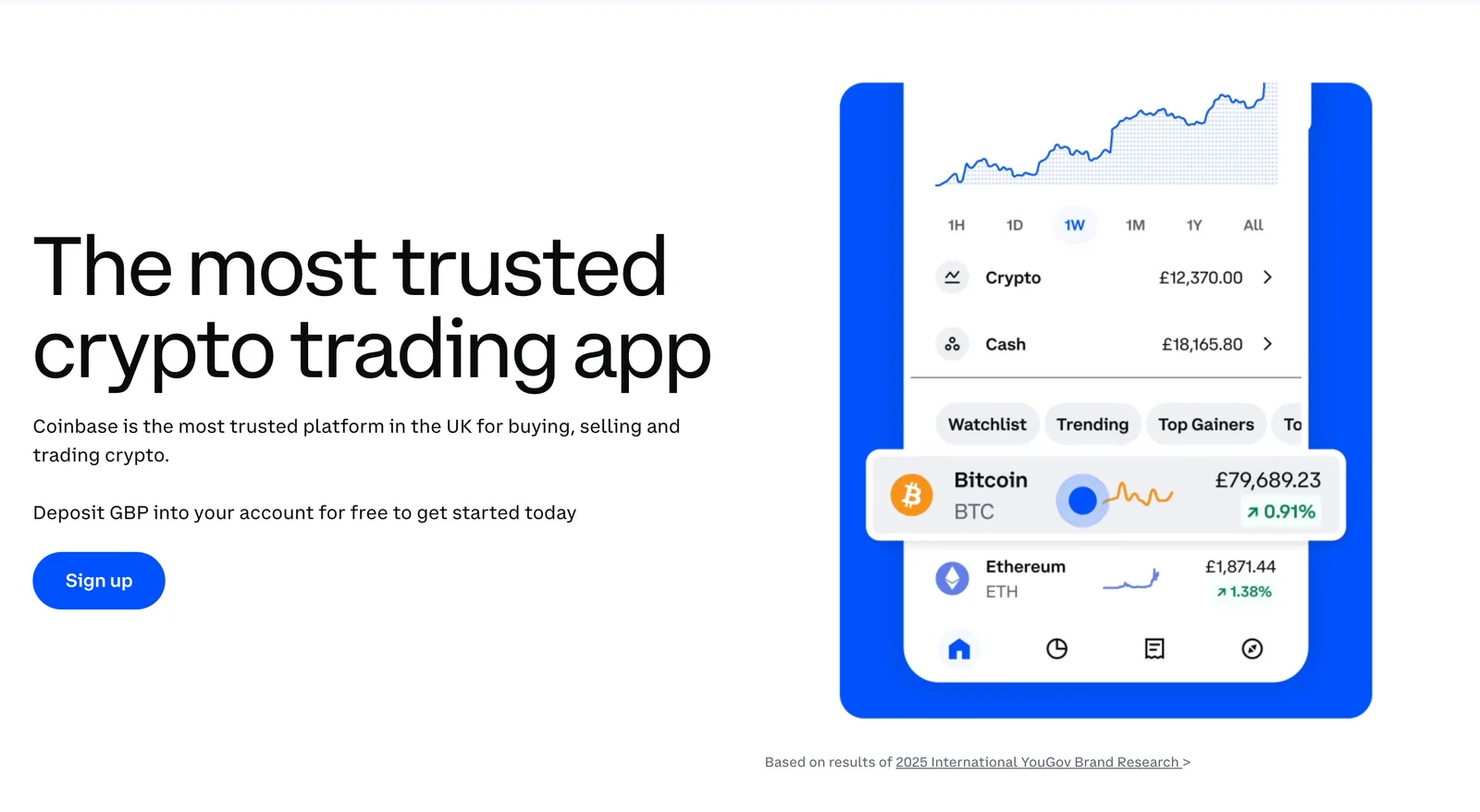
“The first step is even being noticed. Only then have you bought the right to get them interested in the next step: crypto.”Brian Armstrong, Coinbase CEO, via Benzinga (February 2026)
2021: buying growth with ads and bonuses
Spending followed. Sales and marketing expenses for the year ended December 31, 2021 increased by $606.9 million, or 1,069% on the year before. Most of it was paid media, an increase of $397.3 million in digital advertising spend, plus an increase of $60.7 million in customer referral and promotion fees, largely due to new user incentive bonuses.
The Super Bowl QR code
In February 2022 Coinbase ran a Super Bowl ad that was only a bouncing QR code: a playful, low production nod to a popular Internet meme that invites action and discussion both in the living room, and on social media. It came with an offer: Every single new user (whether they were watching the Super Bowl or not) who joins Coinbase by Feb 15 will get $15 in Bitcoin in their Coinbase account.
- 01The adA bouncing QR code, low production on purpose, made to start talk in the room and on social media.
- 02The offer$15 in bitcoin for every new user who joined by 15 February.
- 03The responseOver 20M hits on the landing page in one minute, and engagement 6 times higher than previous benchmarks.
- 04The costSales and marketing rose $49.1 million in the quarter, mostly offline ads and sponsorships.
The response was big enough to strain the site. We saw over 20M+ hits on our landing page in one minute, Coinbase wrote, and engagement that was 6 times higher than our previous benchmarks, which led to us temporarily throttling our systems. Other brands made their own versions; Coinbase noted those who quickly jumped on the chance to create their own version of the ad. It also said it was planning over $100M of similar incentives for the rest of the year.
The quarter’s filing shows the cost side: sales and marketing rose by an increase of $49.1 million predominantly due to offline advertising as well as conference and event sponsorships, and Sales and marketing as a percentage of net revenue was 17.2% and 7.4% in the first quarters of 2022 and 2021.
Coinbase went back to the Super Bowl in 2026. A Kellogg survey said the ad failed to establish a clear connection to the brand or its value proposition. Brian Armstrong’s answer was about attention first: The first step is even being noticed.
From paid media to brand
Across 2022 the budget moved. The annual report shows a decrease of $316.5 million in digital advertising spend due to lower investment in paid media in 2022, an increase of $128.7 million related to higher offline and brand spend, and a decrease of $32.4 million in referral and promotion fees.
Rewards became the biggest line
By 2025 the largest growth driver looked different. Coinbase said users rose primarily due to an increase in users participating in rewards programs, by holding USDC or staking their assets. Those rewards now sit inside marketing: sales and marketing primarily comprise employee-related expenses, marketing programs, USDC rewards, and customer acquisition expenses.
In the 10-K’s Sales and marketing table, USDC rewards were $441.3 million in 2025, against $224.3 million in 2024 and $34.9 million in 2023. Marketing programs were $402.6 million, up from $247.1 million and $134.0 million, mostly from higher digital advertising and brand spend, including corporate sponsorships and go-to-market efforts.
In 2026 the balance tipped further. The third-quarter filing shows a $13.1 million and $78.3 million decrease in digital advertising spend as a response to softer market conditions for the quarter and nine months, and a $71.6 million and $175.7 million increase in USDC rewards. Monthly transacting users were 7.4 million and 7.7 million for those periods, against 9.3 million and 9.2 million a year earlier. Coinbase notes its user metrics have not been validated by an independent third-party.
Affiliates and referrals
The affiliate program pays on trading, not sign-ups: Receive 50% of your referrees’ trading fees for the first 3 months. Approved affiliates get access to promotional assets and Impact tracking software. For users, the referral bonus varies based on country.
The terms carry rules any brand should copy. Promoting your referral code through the use of paid advertising based on 'Coinbase' or Coinbase-related keywords is prohibited. And for the UK: Do not send a referral code or referral link to any resident in the United Kingdom or Turkey. The affiliate page adds that the UK affiliate program is now closed until further notice.
Creators as gatekeepers
Coinbase’s marketing lead, Catherine Ferdon, told Net Influencer: We really decided to invest more heavily in working with creators and influencers after I started. The result was a February 2026 NBA activation built around five creators, two games, VIP access, custom merchandise, and no scripting. The brief was loose by design: No scripts, minimal cues, and no mandated sponsorship language. The campaign generated more than 250,000 impressions and a 2.5% engagement rate across creator content.
- 01NBA activationFive creators, two games, no scripts: over 250,000 impressions and a 2.5% engagement rate.
- 02CastingNot just influencers who are cast, but gatekeepers.
- 03Base Creator RewardsAbout $450,000 to 17,000 creators over seven months, about $26 each, before it ended.
- 04Creator grantsUp to $4,000 for independent creators.
The casting idea is worth stealing: We don’t just want influencers who are people we cast, she said. We’re actually looking for gatekeepers.
Its network, Base, tested paying creators at scale. The Base App distributed around $450,000 to 17,000 creators over seven months, an average of about $26 each, before sunsetting its Creator Rewards program. Base then launched a Creator Grant Program offering independent creators up to $4,000. Owned video stays small by comparison: the Coinbase YouTube channel shows 130K subscribers 765 videos and Base 6.72K subscribers 457 videos.
Paying people to learn
Coinbase also pays users to watch. Its learning rewards work like this: After each tutorial you’ll receive a simple quiz testing what you’ve learned. One NEAR lesson offered up to $3 in NEAR. Token projects pay for the slot: Coinbase receives fees from asset issuers in connection with creating and distributing asset and/or protocol specific learning rewards content. The S-1 described it as educational videos to our retail users to learn about new crypto assets and applications, on which We earn a commission based on the value of crypto assets that are distributed to our users.
The rules every crypto brand now works under
In the UK, the FCA’s 2023 regime changed crypto promotion. ‘refer a friend’ bonuses will also be banned. Firms will need to introduce a cooling-off period for first time investors from 8 October 2023, and ads carry a set warning: Don’t invest unless you’re prepared to lose all the money you invest. Breaking the rules may be committing a criminal offence punishable by an unlimited fine and/or up to 2 years imprisonment. By October 2023 the FCA said Since the regime went live, we have issued 221 alerts.
- 01UK regimeFrom 8 October 2023: a cooling-off period, no refer-a-friend bonuses and a set risk warning. The FCA issued 221 alerts by October 2023.
- 02UK creatorsInfluencers who promote without FCA approval may be committing a criminal offence. Twenty finfluencers were interviewed under caution in 2024.
- 03UK ad rulingIn January 2026 the ASA found Coinbase’s UK ads trivialised the risks of crypto investment.
- 04USThe FTC says disclose anything of value. Under the SEC rule on disclosing pay, Kim Kardashian agreed to pay $1.26 million.
Creators are covered too. Under FG24/1, Unauthorised persons, such as social media influencers, who promote a regulated financial product or service without approval of an appropriate FCA-authorised person may be committing a criminal offence. The FCA found Nearly two-thirds (62%) of 18 to 29-year olds follow social media influencers, 74% of those said they trusted their advice, and in 2024 Twenty finfluencers are being interviewed under caution by the FCA.
Coinbase itself has been ruled against. In January 2026 the ASA found its UK ads trivialised the risks associated with cryptocurrency investment. and said The ads must not appear again in the form complained of.
In the US, the FTC tells creators: Disclose the relationship if you got anything of value to mention a product. The SEC adds that any celebrity or other individual who promotes a crypto asset security must disclose the nature, source, and amount of compensation they received, a rule it enforced when Kim Kardashian agreed to pay $1.26 million in penalties, disgorgement, and interest. For the full picture, see our guide to finfluencer marketing rules.
What any crypto brand can copy
- 01Earn word of mouth before buying reachOver 90% of retail users came organically before the big ad push.
- 02Keep creative cheap and interactiveA low-production QR code drew over 20 million landing page hits in a minute.
- 03Pair attention with an offerThe Super Bowl ad worked with a sign-up bonus behind it.
- 04Pick gatekeepers, not just big namesCreators who already lead a community, with loose briefs and no scripts.
- 05Pay on value, not clicksAffiliates earn a share of trading fees, and referral terms ban brand-keyword ads.
- 06Build each market’s rules into the planReferral links, bonuses, warnings and creator approvals differ by country.
For the method, read how to market a crypto project, crypto influencer marketing, our crypto marketing statistics and what a crypto KOL is. For another platform’s path, see our Robinhood marketing breakdown. To have it run for you, see our crypto clipping agency service. For a rival that leans on sport and creator affiliates, see how Kraken markets. For a brand built on sports sponsorship, see how Crypto.com markets. For the largest exchange’s affiliate and creator programs, see how Binance markets. For an exchange built on football, F1 and festival sponsorship, see how OKX markets. For a self-custody wallet that grew into a trading app, see how Phantom markets. For a self-funded exchange that grew on points and an airdrop, see how Hyperliquid grew. For a crypto hardware brand that sells through affiliates, sport and free education, see our Ledger breakdown. For a wallet that added perps, predictions and a points program, see our MetaMask breakdown. For a self-custody wallet built on quests and airdrops, see our Trust Wallet breakdown. For a decentralised exchange that grew through builders, see our Uniswap breakdown. For how a DeFi lender markets, see our Aave breakdown. For a chain named in the same SEC case, see our Solana breakdown. For a staking protocol the SEC staff commented on, see our Lido breakdown. For a firm that says an SEC probe closed without charges, see our Ondo Finance breakdown. For an exchange warned by regulators in several countries, see our Bitget breakdown. For an exchange that left the US market, see our KuCoin breakdown. For another US exchange that markets trust, see our Gemini breakdown. For a crypto payments company that hired a former Coinbase president, see our MoonPay breakdown. For a European crypto broker that started by selling Bitcoin vouchers at the post office, see our Bitpanda breakdown. For the stablecoin issuer that ran the Centre consortium with Coinbase until 2023, see our Circle breakdown. For a crypto brand that put plush toys in over 2,000 Walmart stores, see our Pudgy Penguins breakdown. For a crypto game that grew through friends and referral links before paid ads, see our Sorare breakdown. For a blockchain that won Reddit, Starbucks and Nike with a team of brand people, see our Polygon breakdown. For a payments app that sold bitcoin to the crowd its Friday giveaways brought in, see our Cash App breakdown. For the network Coinbase incubated, which grew through builders and a summer festival, see our Base breakdown. For a Telegram game that grew to more than 35 million people with no sign-up and no wallet on day one, see our Notcoin breakdown. For a hardware wallet brand that markets self-custody through free bitcoin classes in 32 countries, see our Trezor breakdown. For a crypto app that lets users check for themselves that their balances are in its Proof of Liabilities, see our SwissBorg breakdown. For a crypto company that tells one founding scene, a small apartment in York in 2011, on every page that matters, see our Blockchain.com breakdown. For a crypto education brand whose YouTube channel has 2.73M subscribers and more than 311 million views, see our Coin Bureau breakdown. For a crypto show that turns one interview into a full episode, segments and shorts within two days, see our Unchained breakdown. For a bitcoin-only platform that publishes a Proof of Reserves every month, see our River breakdown. For an event app with 9,000+ logged-in users and 16,000 POAPs minted, see our Ethereum breakdown. For a blockchain foundation with 573 dated blog posts, every one with a byline, see our Stellar breakdown. For a crypto company that added 11 Learn guides with 81 FAQ questions in 2026, see our Ripple breakdown. For a crypto exchange that numbers its weekly market report, see our Bitfinex breakdown. For a crypto brand whose blog grew to 644 posts since 2018, see our NEAR breakdown. For the platform Robinhood Chain is built with, see our Arbitrum breakdown. For a self-custody company whose blog has 39 explainer posts, see our Casa breakdown. For a crypto company with a stablecoin rewards story, see our Fireblocks breakdown. For a crypto company with a stablecoin rewards story, see our Strike breakdown. For a crypto exchange that works with creators, see our Chainalysis breakdown. For a crypto exchange whose blog runs named research series, see our CEX.IO breakdown. For a crypto brand whose sitemap lists more than 210,000 URLs in 11 languages, see our Tangem breakdown. For a crypto wallet blog that turned from wallet users to developers, see our Zerion breakdown.
We run daily short-form on accounts you own and creator campaigns built for each market’s promotion rules, with every post checked before it goes out and tracked for views, link clicks and click-through rate. The system in this article, run for you.
Frequently asked questions
Mostly without paid ads. Its 2021 S-1 says that since inception over 90% of its retail users had found it organically or through word of mouth.
Coinbase said the 2022 ad drove over 20 million hits to its landing page in one minute and engagement six times its previous benchmarks, enough that it temporarily throttled its systems.
Yes. Its affiliate page offers 50% of referred users’ trading fees for the first three months, tracked through Impact. The UK affiliate program is closed.
Yes. Its marketing lead told Net Influencer the company invested more in creators after she joined, and a February 2026 NBA activation used five creators with no scripts.
No. Coinbase’s referral terms say not to send a referral code or link to anyone resident in the UK or Turkey, and the FCA banned refer-a-friend bonuses for crypto in 2023.
- SEC EDGAR, Coinbase Form S-1 registration statement (Feb 2021)
- SEC EDGAR, Coinbase Form 10-K for 2021 (Feb 2022)
- Coinbase Blog, Everyone Wins at Super Bowl LVI: WAGMI! (Feb 2022)
- SEC EDGAR, Coinbase Form 10-Q for Q1 2022 (May 2022)
- SEC EDGAR, Coinbase Form 10-K for 2022 (Feb 2023)
- Benzinga via Yahoo Finance, Brian Armstrong Explains Why Coinbase Made The Poorly Received Karaoke Super Bowl Ad (Feb 2026)
- Cointelegraph, crypto ads at the Super Bowl feature (Feb 2026)
- SEC EDGAR, Coinbase Form 10-K for 2025 (Feb 2026)
- SEC EDGAR, Coinbase Form 10-Q for Q3 2026 (Oct 2026)
- Coinbase, Affiliates program page (Apr 2026)
- Coinbase Help, Coinbase referral program (Oct 2026)
- Net Influencer, Coinbase's NBA Playbook: No Script and a Creator Brief Built on 'Show, Don't Tell' (May 2026)
- Cointelegraph, Base App sunsets Creator Rewards to double down on trading (Feb 2026)
- crypto.news, Base launches Creator Grant Program with up to $4,000 for creators (Sep 2026)
- YouTube, Coinbase channel page (Nov 2026)
- YouTube, Base channel page (Nov 2026)
- Coinbase, Learn about crypto and get rewards (Apr 2025)
- FCA, FCA introduces tough new rules for marketing cryptoassets (Jun 2023)
- FCA, FCA sets expectations ahead of incoming crypto marketing rules (Sep 2023)
- FCA, FCA warns about common issues with crypto marketing (Oct 2023)
- FCA, FG24/1: Finalised guidance on financial promotions on social media (Mar 2024)
- FCA, FCA cracks down on illegal finfluencers (Oct 2024)
- ASA, Ruling on CB Payments Ltd t/a Coinbase (Jan 2026)
- FTC, Disclosures 101 for Social Media Influencers (Nov 2026)
- SEC, SEC Charges Kim Kardashian for Unlawfully Touting Crypto Security (Oct 2022)