Young people learn about money on social media: 60 percent of US investors aged 18 to 34 use it for investing, and in a Credit Karma survey YouTube was the top platform Gen Z used for financial advice.
Marketing a fintech app with creators takes seven steps: find where your users learn about money, check each platform’s finance rules, know the creator rules by country, pick creators and formats, label every post, track every install, and supervise and keep records.
The brand carries the risk. FTC staff say advertisers need reasonable programs to train and monitor the people who promote them, and the FCA warns that unapproved influencers promoting regulated products may be committing a criminal offence.
Why creators work for fintech
People pick money apps on the recommendation of someone they watch. A FINRA Foundation brief found that 29 percent of US investors use social media for investing, rising to 60 percent among those aged 18 to 34. In a Credit Karma survey, YouTube was the top platform Gen Z used for financial advice, ahead of Instagram and TikTok. ASIC cites research that 63% of Gen Z Australians rely on social media for financial information, and the FCA says millions of consumers in the UK now turn to it for financial advice. For how many investors trade on apps and learn on YouTube, see our retail trading statistics.
The same audience is exposed to bad advice. In that Credit Karma survey, more than a third of Gen Z said they had got into trouble after following a financial creator, and FINRA found that social media users targeted by fraud were far more likely to lose money. That is why every platform and regulator now has rules for finance content, and why the steps below start with them.
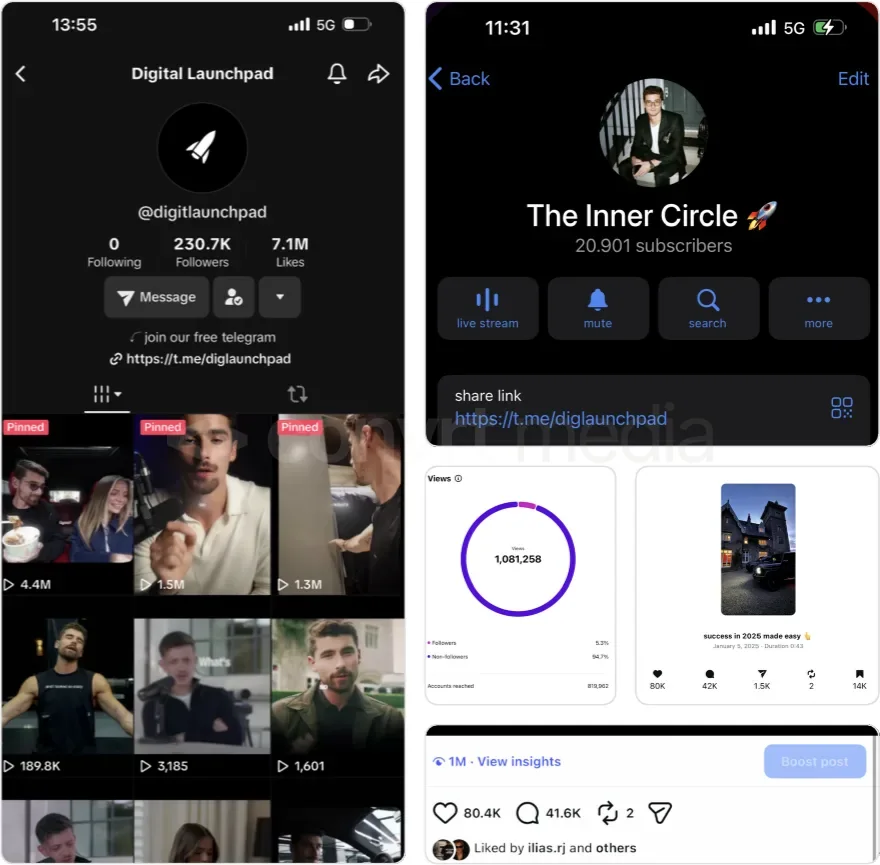
Step 1: Find where your users learn about money
Start with the channel, not the creator. Revolut’s UK growth lead told Digiday that YouTube is typically the main focus when it picks creators, and that TikTok was one we have not cracked for in-depth personal finance. Short-form still works for simple, visual products: a budgeting app can show a feature in 20 seconds, an investing product usually needs longer. Apple also says almost 65% of downloads happen straight after a search, so creator content that gets people searching for your app name counts as well as a direct link.
Step 2: Check each platform’s finance rules
- TikTok. Financial services ads must be restricted to people aged 18 and over, and lending ads in some markets must show rates, fees and representative examples. Branded content for loans, cards, insurance and investing is limited to adults in the market where the product is offered, and is not allowed at all in a list of markets.
- Meta. Ads for credit cards, loans and insurance must target people aged 18 or older, and in some markets only verified firms may promote investment products, even in educational content.
- Google and YouTube. Financial ad disclosures must be visible straight away, not behind a hover or link. Verification is separate for each country you target, now covers every EU and EEA country, and comes to the US and Canada in early 2027.
Step 3: Know what creators may say in each country
- 01UKInfluencers who promote a regulated product without approval from an authorised firm may be committing a criminal offence. The ASA’s influencer guide has a 2026 edition for the new consumer law.
- 02AustraliaFinfluencers giving financial product advice must hold a licence or act as an authorised representative, and being paid makes it more likely that what they say counts as advice.
- 03EUESMA tells creators that a line such as this is not investment advice will not protect them.
- 04USThe SEC treats promoting a stock without disclosing pay as touting, and FTC rules on endorsements apply to every paid post.
The safe ground for most fintech apps is the product itself: how to open an account, set a budget, send money or round up savings. For investment products, see our guide to finfluencer marketing rules.
Step 4: Pick creators and formats that fit
Big fintechs mix reach and trust. Revolut works with personal finance micro creators as well as large YouTubers, Chime paired a national campaign with a Twitch streamer and a TikTok creator, and The Paypers notes that Chime, Revolut and Nubank all work with well-known creators. Creators are now moving into the category themselves: MrBeast’s company bought the youth fintech Step in February 2026.
Smaller apps win on fit. Dutch finance app Dyme picked UGC creators whose style matched its brand voice and built videos around everyday money mishaps with the app as the fix. Mexican fintech Digitt followed the rule “Don’t make ads, make TikToks”. Brief creators on one feature and one everyday problem it solves, and let them say it their way.
Step 5: Label every post
ESMA says paid finance posts need a clear label such as Ad, Paid partnership or Sponsored, not tiny text or hashtags alone. The FTC says a video disclosure belongs in the video itself, and that affiliate links need disclosure in the video and near the links. On TikTok creators must switch on the commercial content disclosure toggle, and on YouTube they tick the paid promotion box. FTC staff are clear that the brand and the influencer, not the platform, are responsible.
Step 6: Track every install
- 01Web linksTag every link with utm_source, utm_medium and utm_campaign, and use utm_content to tell one creator’s video from another.
- 02iOSApp Store Connect campaign links credit a first download made within 24 hours of using the link, give credit to the most recent link only, and hide metrics below a minimum of 5, so small creators may show nothing. Apple lets you publish up to 70 custom product pages and says they lift conversion by 2.5 percentage points on average, so give each big creator a page that matches their video.
- 03AndroidThe Play Install Referrer API reads the link behind each install.
Judge each creator on views, link clicks and click-through rate, then on the installs and sign-ups their links bring.
Step 7: Supervise and keep records
FTC staff say advertisers need reasonable programs to train and monitor the people promoting them. ASIC expects firms that authorise finfluencers to keep documented supervision arrangements, to have enough compliance staff to monitor them, and to use a written agreement. A Fortune commentary urges finance marketers to work closely with legal teams and stress test campaigns. In practice: approve every script and post before it goes live, store it, and keep the contract with it.
What regulators are acting on
In April 2026 seventeen regulators joined an FCA-led week of action against illegal finfluencers, and the FCA secured a guilty plea from a reality TV star for illegal promotions. Three finfluencers were charged over forex posts in 2025. ASIC issued warning notices to four finfluencers and cancelled a licence partly for failing to make sure its representatives followed the law. An FCA review reported by Reuters found most illegal finance ads on Meta in one week came from advertisers it had already flagged, Robinhood’s 2025 settlement included failing to manage the influencers promoting it, and the SEC suspended trading in 13 small-cap stocks pushed through social media tips. Firms that supervise their creators stay out of these stories.
Doing it with a team
Creators borrow an audience; accounts you own build one that stays. Our Content Teams edit and post every day on accounts you own, set up in the countries you operate in, with views, link clicks and click-through rate tracked per account and every post checked before it goes out. Creator campaigns handle sourcing, briefs, approvals and contracts, with every post tracked, quoted per campaign. See how we work with fintech apps. Pricing is quoted per project.
For brokers and trading apps, see how to market a trading app or broker and our trading platform marketing.
Comparing partners? Our list of fintech marketing agencies sets out who does what. For a finance app that grew mostly on referrals, see how Revolut markets. For a fintech whose top channel is referrals, see our Chime breakdown. For a fintech that grows through referrals and search, see our Wealthfront breakdown. For a fintech built on athletes and paid creators, see our Betterment breakdown. For an app that grew through rewards and referrals, see our Acorns breakdown. For a fintech that grew on word of mouth with no marketing team, see our Zerodha breakdown. For a fintech that grew on Quora answers, blogs and its own YouTube channel, see our Groww breakdown. For a fintech that let people apply for IPOs inside WhatsApp, see our Upstox breakdown. For a fintech that surrounds its trading app with education, newsletters and a forum, see our Dhan breakdown. For a platform whose personal finance list starts with controlling debt, see our Hargreaves Lansdown breakdown.
Want this run for you on accounts you own? See how Content Teams works →
Frequently asked questions
Find where your audience learns about money (usually YouTube first, then Instagram and TikTok), check each platform’s financial services rules, confirm what creators may legally say in each country, pick creators whose style matches your brand, make sure every post is labelled as paid, give each creator a tracked link to the app store, and review and keep every post.
In many markets, yes, for adults and only in the market where the product is offered. TikTok’s branded content policy covers loans, credit cards, insurance and investing, bans financial services branded content in a list of markets, and requires creators to switch on the commercial content disclosure toggle.
It depends on the country and what they say. In Australia, finfluencers who give financial product advice must hold a licence or act as an authorised representative. In the UK, promoting a regulated product without approval from an authorised firm may be a criminal offence. General app features are lower risk than product advice or investment tips.
No. ESMA’s factsheet for creators says disclaimers such as this is not investment advice will not protect them. What matters is whether the post is labelled as paid and what it actually says about the product.
Give every creator their own tracked link. On iOS, App Store Connect campaign links credit a first download made within 24 hours of using the link, and custom product pages let each creator send people to their own version of the store page. On Android, the Play Install Referrer API reads the link behind each install. On the web, tag links with UTM parameters and use utm_content to separate creators.
- FINRA Foundation, investors and social media brief (Apr 2026)
- Tubefilter, Credit Karma survey on finance creators (Feb 2025)
- ASIC, finfluencer action and Moneysmart research (Apr 2026)
- FCA, global action on illegal finfluencers (Apr 2026)
- Apple Ads, App Store search
- TikTok, financial services ad policy (Sept 2026)
- TikTok, branded content policy (Oct 2026)
- Meta, financial and insurance products ad standards
- Google Ads, financial services policy
- Google Ads, financial services verification
- PPC Land, Google verification for US and Canada (Oct 2026)
- PPC Land, Google verification across the EU and EEA (June 2026)
- FCA, FG24/1 finfluencers and social media guidance (Mar 2024)
- ASIC, giving financial product advice on social media
- ESMA, finfluencer factsheet (Jan 2026)
- FTC, Endorsement Guides: what people are asking
- Investor.gov, social media stock tips alert (Feb 2026)
- FTC, Disclosures 101 for social media influencers
- YouTube Help, paid product placements and endorsements
- ASA, influencers’ guide to making clear that ads are ads (2026)
- Digiday, Revolut’s creator strategy (July 2024)
- Digiday, fintech brands and creator campaigns (Sept 2024)
- TikTok, Dyme success story (Aug 2025)
- TikTok, Digitt success story (Mar 2025)
- The Paypers, why creators are moving into fintech (Mar 2026)
- Fortune, finfluencers and brand risk (Nov 2025)
- Google Analytics Help, URL builders and UTM parameters
- Android Developers, Play Install Referrer
- Apple, App Store Connect campaign links
- Apple, custom product pages
- FCA, three finfluencers charged (Sept 2025)
- The Star (Reuters), FCA review of illegal ads on Meta (Mar 2026)